
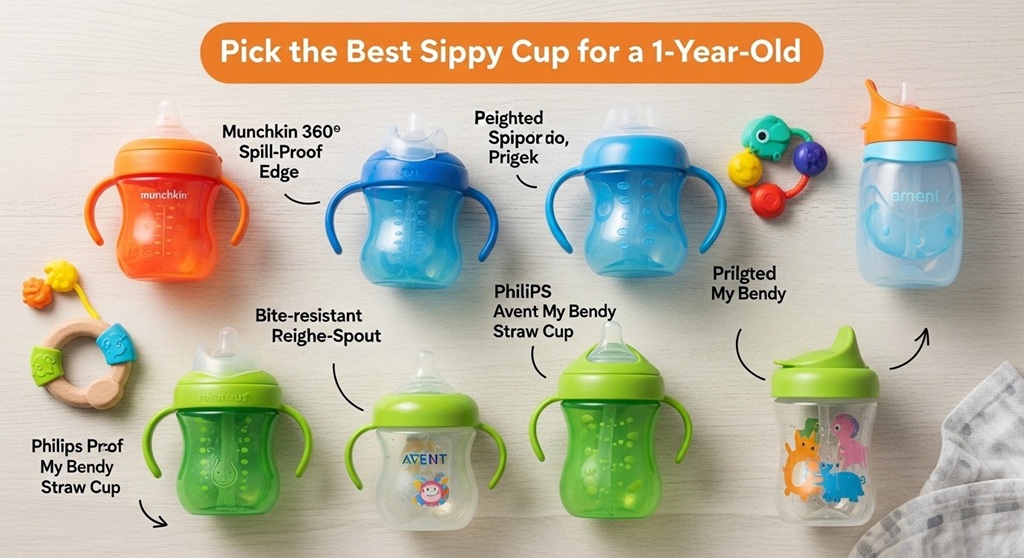
How to Pick the Best Sippy Cup for a 1-Year-Old
The best sippy cup for a 1-year-old is one that supports oral development, prevents leaks, is easy to clean, and matches your child’s motor skills. Most pediatric feeding experts recommend a straw cup or open training cup over traditional hard-spout models.
Your baby just turned one. Bottles are slowly phasing out. You’re shopping for toddler feeding gear, and suddenly there are dozens of cup types—spout, straw, 360, silicone, stainless steel.
This guide breaks it down using real data, pediatric recommendations, and practical experience. If you’re also browsing first birthday gifts, a high-quality sippy cup is one of the most practical and development-friendly options you can choose.
Let’s solve the confusion step by step.
Why Do 1-Year-Olds Need to Transition From Bottles?
Short answer: Pediatric experts recommend transitioning from bottles around 12 months to protect dental health and support oral motor development.
According to the American Academy of Pediatrics (AAP), prolonged bottle use beyond 12–18 months increases the risk of:
- Tooth decay (especially with milk or juice exposure)
- Speech delays linked to oral muscle patterns
- Overconsumption of milk and excess calorie intake
- Dependency that delays independent drinking skills
A 2020 pediatric dental review found that toddlers using bottles past 18 months showed significantly higher early childhood caries rates compared to those who transitioned earlier.
That’s why choosing the right toddler cup isn’t just convenience—it’s developmental support.
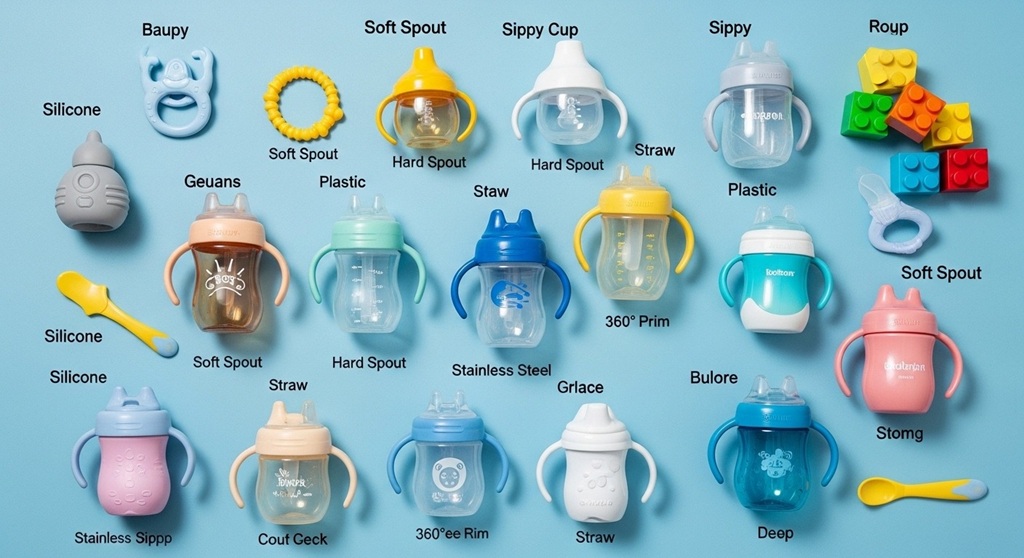
What Types of Sippy Cups Are Available for Toddlers?
Short answer: The main types are hard spout, soft spout, straw cups, 360 cups, and open training cups. Straw and open cups are generally preferred by feeding therapists.
1. Hard Spout Cups
These mimic bottles. They are durable but often encourage the same sucking motion as bottle feeding.
- Pros: Leak-resistant, durable
- Cons: May delay proper tongue positioning
2. Soft Spout Cups
Made from silicone. Easier transition from bottle.
- Pros: Gentle on gums
- Cons: Still promotes immature sucking patterns
3. Straw Cups (Recommended)
Encourage lip rounding and tongue elevation. These skills support speech development.
- Pros: Dentist-approved, developmentally supportive
- Cons: Slight learning curve
4. 360 Cups
Allow sipping from any side. Spill-resistant.
- Pros: Feels like open cup
- Cons: Some models require biting pressure
5. Open Training Cups
Small cups without lids. Best for skill development but messy at first.
Many parents looking for practical toddler feeding gear prefer straw or 360 cups because they balance skill development with convenience.
What Do Pediatric Experts Recommend?
Short answer: Most pediatric speech and feeding therapists recommend straw cups or small open cups by age one.
A 2019 study published in pediatric feeding research highlighted that prolonged spout use can affect tongue resting posture. Straw drinking activates muscles needed for clear speech sounds.
Speech-language pathologists commonly advise:
- Introduce straw cups between 9–12 months
- Limit hard spout dependency
- Encourage supervised open cup practice
This aligns with current oral motor development guidelines used in early intervention programs.
What Features Should You Look for in the Best Sippy Cup?
Short answer: Look for spill resistance, easy cleaning, BPA-free materials, size appropriate for small hands, and development-friendly design.
1. Material Safety
- BPA-free plastic
- Food-grade silicone
- Stainless steel for durability
Always check safety certifications. Avoid cups with difficult-to-clean valves where mold can build up.
2. Easy to Clean
Complex valve systems increase bacteria risk. Dishwasher-safe models are ideal.
3. Leak Resistance
Toddlers throw cups. Choose spill-proof lids but avoid overly restrictive flow.
4. Appropriate Flow Rate
Milk should flow easily without excessive sucking effort.
5. Size and Grip
6–10 oz capacity works best for 1-year-olds. Lightweight cups encourage independence.
If you want a breakdown of models that meet these criteria, review this guide on
first birthday gifts that highlights affordable and development-friendly choices.
How Do You Choose Based on Your Child’s Personality?
Short answer: Match the cup to your toddler’s skill level and temperament.
- Strong-willed toddlers: Spill-proof straw cup
- Calm learners: 360 cup or open training cup
- Still attached to bottle: Soft straw transition cup
Some toddlers adapt in days. Others need weeks. Consistency matters more than perfection.
Are Expensive Sippy Cups Better?
Short answer: Not necessarily. Function and safety matter more than branding.
A consumer product review in 2022 compared 18 toddler cups. The findings showed:
- Leak resistance did not correlate with price.
- Ease of cleaning was the biggest predictor of parent satisfaction.
- Mid-range straw cups performed best overall.
Affordable toddler feeding gear can perform just as well as premium models if they meet safety and design standards.
What Mistakes Should Parents Avoid?
Short answer: Avoid prolonged bottle replacement habits and overly complex designs.
- Using sippy cups all day like bottles
- Filling with juice regularly
- Skipping cleaning valves thoroughly
- Choosing cups that require biting instead of sipping
Water between meals is ideal. Milk during structured snack times reduces dental risk.
How Long Should a Child Use a Sippy Cup?
Short answer: Most children transition fully to open cups by 18–24 months.
The sippy cup is a stepping stone. It’s not the final stage. Pediatric dentists suggest encouraging open cup skills by age two.
Gradual progression works best:
- Straw cup primary use
- Open cup practice at meals
- Phase out spill-proof lids
Is a Sippy Cup a Good First Birthday Gift?
Short answer: Yes. It’s practical, development-focused, and used daily.
While toys are fun, practical first birthday gifts that support growth are often more valuable. Parents consistently report that high-quality toddler feeding gear gets daily use.
A feeding tool that supports independence is a gift that keeps delivering long after the party ends.
Conclusion: How Do You Make the Final Decision?
Choosing the best sippy cup for a 1-year-old doesn’t have to be overwhelming. Focus on development. on safety. on ease of cleaning.
Straw cups and open training cups are widely supported by pediatric professionals. Hard spouts are convenient but not ideal long term. Expensive doesn’t always mean better.
Your goal is simple: help your toddler drink independently while protecting their teeth and speech development.
If you’re comparing options, reviewing tested models can save time and money. Start with expert-reviewed recommendations and choose one that fits your child’s habits.
Ready to upgrade your toddler feeding gear? Pick a development-friendly cup today and make the bottle transition smoother for both you and your child.
Frequently Asked Questions (FAQs)
What is the safest sippy cup material?
Food-grade silicone and stainless steel are considered safest. BPA-free plastic is acceptable if certified and free from harmful chemicals.
Are straw cups better than spout cups?
Yes. Straw cups support proper tongue positioning and oral motor development compared to traditional spouts.
When should I stop using a sippy cup?
Most children transition fully to open cups between 18 and 24 months.
Can a 1-year-old drink milk from a straw cup?
Yes. Whole milk can be served in straw cups. Ensure proper cleaning to prevent residue buildup.
How many sippy cups should I own?
Two to four cups are practical. This allows rotation during cleaning and daycare use.
Do sippy cups cause speech delays?
Prolonged hard spout use may impact oral posture. Straw and open cups are preferred by speech professionals.
Related Topic: Five Ways to Save for Your Tax Bill
Read Next: An introduction to respite care