
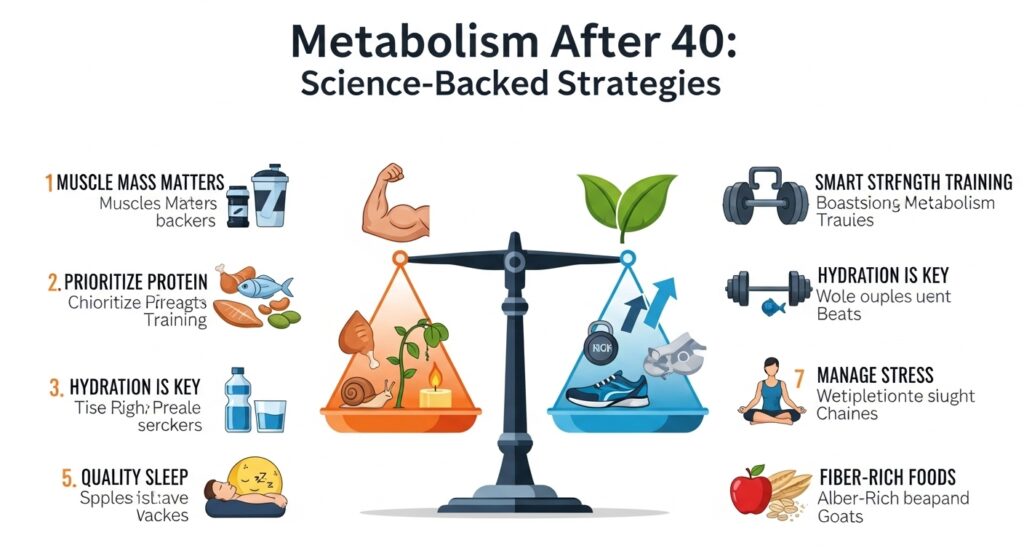
Boost Your Metabolism After 40: Science-Backed Guide
Turning 40 often feels like your metabolism suddenly slows down. Weight gain happens faster. Energy drops. The same routines stop working. Many people assume aging makes fat gain unavoidable. Science shows that is only partly true.
What Actually Happens to Metabolism After 40?
Snippet Answer: After age 40, metabolism slows mainly because muscle mass declines, physical activity decreases, and hormone levels shift. Resting metabolic rate drops gradually, but lifestyle factors influence far more change than aging alone. Strength training, protein intake, and sleep quality can significantly preserve metabolic function.
Does Metabolism Really Slow Down After 40?
Answer Block: Metabolism does not suddenly crash after 40. Research shows resting metabolic rate stays relatively stable until about age 60. The perceived slowdown usually comes from muscle loss, reduced activity levels, hormonal shifts, and poor sleep patterns rather than aging itself.
Large metabolic studies using doubly labeled water techniques found that energy expenditure remains stable from ages 20 to 60 when body composition is controlled. This challenges the popular belief that metabolism sharply declines in midlife.
However, muscle mass begins declining at approximately 3–8% per decade after age 30. This accelerates after 40 if resistance training is absent. Because muscle tissue burns more calories than fat tissue, this contributes to gradual metabolic slowdown.
Other contributors include:
- Lower spontaneous physical movement during the day
- Reduced exercise frequency
- Changes in insulin sensitivity
- Higher stress hormone exposure
- Sleep disruption
The key takeaway: metabolism changes are real but mostly controllable.
Why Does Muscle Loss Reduce Metabolism After 40?
Answer Block: Muscle tissue burns more calories than fat tissue even at rest. After age 40, muscle loss reduces resting energy expenditure, making weight gain easier. Strength training preserves lean mass and helps maintain metabolic rate over time.
Skeletal muscle is metabolically active tissue. Each kilogram of muscle contributes significantly more to daily energy expenditure than fat mass.
Without resistance exercise, adults typically lose up to 1% of muscle yearly after 40. This condition, known as sarcopenia, reduces strength, mobility, and calorie burning capacity.
Strength training reverses this trend.
Evidence-based benefits include:
- Increased resting metabolic rate
- Improved insulin sensitivity
- Reduced visceral fat storage
- Enhanced hormone signaling
Two to three weekly resistance sessions can significantly preserve lean mass into older adulthood.
How Does Protein Intake Support Metabolism After 40?
Answer Block: Higher protein intake helps maintain muscle mass, increases thermogenesis, and supports appetite regulation after 40. Adults over 40 benefit from consuming 1.2–1.6 grams of protein per kilogram of body weight daily to protect metabolic health.
Protein plays a central role in metabolic preservation because it stimulates muscle protein synthesis.
It also has the highest thermic effect of food among macronutrients. Approximately 20–30% of protein calories are used during digestion and absorption.
| Macronutrient | Thermic Effect | Metabolic Impact |
|---|---|---|
| Protein | 20–30% | Supports muscle and fat loss |
| Carbohydrates | 5–10% | Moderate metabolic boost |
| Fat | 0–3% | Lowest metabolic effect |
Spreading protein evenly across meals improves results.
Examples of effective sources include:
- Eggs
- Fish
- Greek yogurt
- Chicken breast
- Lentils
- Tofu
What Role Do Hormones Play in Midlife Metabolism?
Answer Block: Hormonal shifts after 40 affect metabolism by influencing fat storage, muscle retention, and appetite regulation. Declines in estrogen, testosterone, growth hormone, and thyroid activity contribute to slower calorie burning but can be moderated through lifestyle strategies.
Hormones regulate how efficiently your body uses energy.
Key metabolic hormones affected after 40 include:
- Estrogen
- Testosterone
- Insulin
- Growth hormone
- Thyroid hormones
Lower estrogen levels during perimenopause shift fat storage toward the abdominal region. Reduced testosterone lowers muscle synthesis capacity in both men and women.
Sleep disruption further increases cortisol exposure, which promotes fat retention.
Lifestyle improvements shown to stabilize hormone function include:
- Resistance training
- High-quality sleep
- Protein-rich diets
- Stress management
- Daily movement
Can Strength Training Reactivate a Slower Metabolism?
Answer Block: Strength training is the most effective way to boost metabolism after 40 because it increases lean muscle mass, improves insulin sensitivity, and raises resting energy expenditure. Even two weekly sessions significantly improve metabolic health.
Resistance training produces both immediate and long-term metabolic benefits.
Immediately after exercise, calorie burn increases through excess post-exercise oxygen consumption (EPOC). Over time, increased muscle mass raises baseline energy expenditure.
Recommended weekly structure:
- 2–3 resistance sessions
- 8–12 repetitions per exercise
- Major muscle groups targeted
- Progressive load increases
Compound exercises provide the greatest metabolic return:
- Squats
- Deadlifts
- Push-ups
- Rows
- Overhead presses
Does Sleep Affect Metabolism More Than People Think?
Answer Block: Poor sleep reduces metabolic efficiency by disrupting insulin sensitivity, increasing hunger hormones, and lowering energy expenditure. Adults over 40 should prioritize 7–9 hours of sleep nightly to maintain metabolic balance and prevent weight gain.
Sleep deprivation alters two critical appetite hormones:
- Ghrelin increases hunger
- Leptin decreases fullness signals
This leads to higher calorie intake without conscious awareness.
Sleep loss also increases cortisol levels, which promotes fat storage around the abdomen.
Research shows people sleeping fewer than six hours nightly are significantly more likely to gain weight over time.
Sleep-support strategies include:
- Consistent sleep schedule
- Morning sunlight exposure
- Reduced evening screen time
- Limiting caffeine after midday
Does Daily Movement Matter More Than Intense Exercise?
Answer Block: Daily movement contributes more to total calorie burn than structured workouts alone. Increasing walking, standing time, and general activity levels helps maintain metabolism after 40 by raising non-exercise activity thermogenesis throughout the day.
Non-exercise activity thermogenesis (NEAT) includes all movement outside formal workouts.
Examples include:
- Walking between tasks
- Standing while working
- Household chores
- Taking stairs
- Stretching breaks
People with high NEAT levels burn hundreds more calories daily than sedentary individuals.
Simple habits that increase metabolic output:
- Walk 7,000–10,000 steps daily
- Stand every 30 minutes
- Use walking meetings
- Park farther away intentionally
Which Foods Help Support Metabolism After 40?
Answer Block: Whole foods rich in protein, fiber, and micronutrients support metabolism after 40 by stabilizing blood sugar, preserving muscle mass, and improving hormonal balance. Processed foods reduce metabolic efficiency and increase fat storage risk.
Metabolism-supporting foods improve insulin response and energy regulation.
Evidence-based choices include:
- Leafy greens
- Fatty fish
- Legumes
- Whole grains
- Nuts and seeds
- Berries
Fiber intake is especially important because it slows glucose absorption and improves gut microbiome diversity.
A practical daily structure:
- Protein at every meal
- Vegetables twice daily
- Whole grains instead of refined carbs
- Healthy fats in moderation
Conclusion: The Science-Backed Strategy That Works After 40
Metabolism after 40 does change, but it does not collapse. The biggest drivers of metabolic slowdown are muscle loss, reduced activity, sleep disruption, and hormonal shifts. Each of these factors responds strongly to lifestyle changes.
Strength training preserves lean mass. Protein supports recovery and thermogenesis. Movement increases calorie expenditure. Sleep regulates appetite hormones. Whole foods stabilize blood sugar.
These interventions work together to maintain metabolic efficiency across midlife and beyond.
Start with three simple steps this week:
- Add two strength workouts
- Increase daily protein intake
- Walk 7,000 steps daily
Consistency produces measurable metabolic improvements within weeks.
Frequently Asked Questions
Can metabolism increase after age 40?
Yes. Strength training, higher protein intake, improved sleep quality, and increased daily movement can raise metabolic rate after 40 by preserving muscle mass and improving hormone balance.
How much protein should adults over 40 eat daily?
Most adults benefit from 1.2–1.6 grams of protein per kilogram of body weight per day to support muscle maintenance and metabolic health.
Is walking enough to boost metabolism after 40?
Walking improves daily calorie expenditure and insulin sensitivity, but combining walking with resistance training produces stronger metabolic results.
Do hormones permanently slow metabolism after 40?
No. Hormonal shifts influence metabolism, but exercise, nutrition, sleep, and stress control can significantly offset these changes.
Does strength training work if started later in life?
Yes. Research shows adults over 40 and even over 60 can gain muscle mass and increase metabolic rate through resistance exercise.
How many workouts per week are needed?
Two to three resistance sessions weekly are sufficient to maintain lean mass and support metabolism.
Which foods slow metabolism the most?
Ultra-processed foods high in refined sugar and low in protein reduce metabolic efficiency and increase fat storage risk.
Read More Also: Where to Stay: Combination Hotel Break and Walking
Learn More: Five mistakes to avoid when strapping a car to a trailer